THE FAMINE IS HERE!
I’ve been saying this all this time!
The famine upon the church is very present and noticeable. And now in these last days is challenging to every grain of belief you have.
These famines are like tsunamis that have literally awashed the church of today with its terrible poison and deadly intent.
I’ve taken my thoughts from the Book of Ruth.
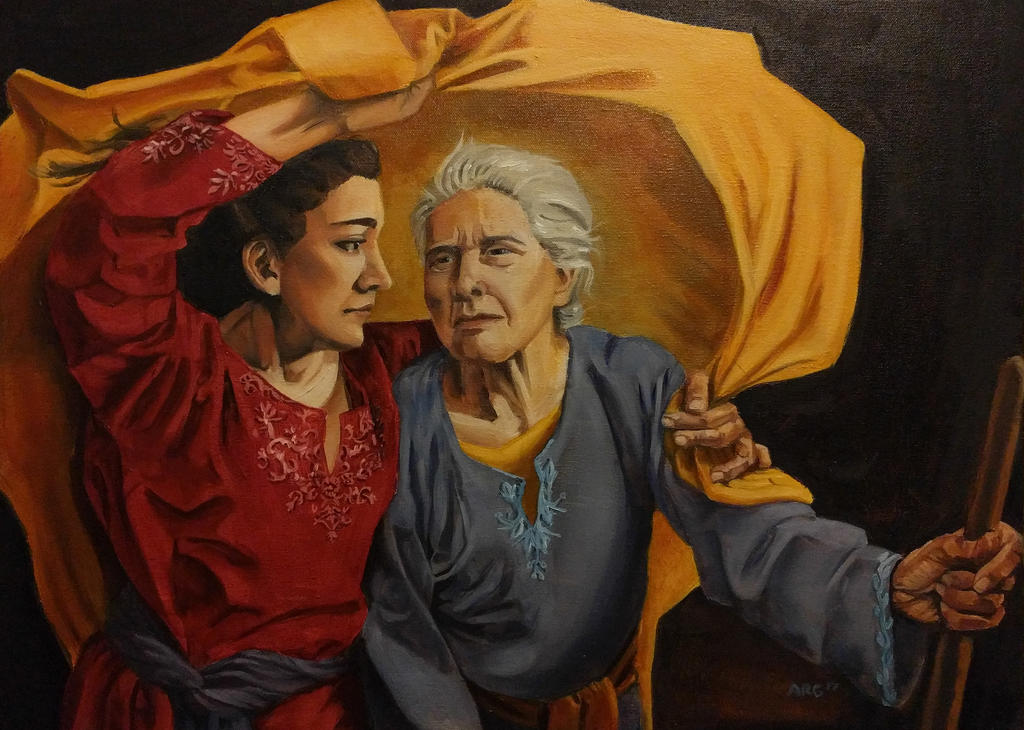
Listen to a scholar as he describes this book…
The little Book of Ruth…consists of only eighty-five verses but these enclose a garden of roses, as fragrant and full of mystic calyxes, as those which the modern traveller still finds blooming and twining about the solitary ruins of Israel and Moab, this side of Jordan and beyond.
The book of Judges shows us the height of moral deterioration that encompassed the society of that day. Even those seemingly having the ‘fear of the Lord’ lost their commitment and call. The book of Ruth turns a new sidelight on the scene and shows us that amid the despicable degeneracy there were instances of upright love, holy loyalty and high epitomes of lifestyle.
Truly, the Book of Ruth is a silver star in an inky black sky, a glorious rose blooming amid desert aridness, a pure gem flashing amid foul debris, and a breath of fragrance amid surrounding sterility.
So, there is a famine come upon the church. The economics of nations are changing rapidly. People are going to lose more jobs. But our faith is important because God supplies my needs. My life and the way I live is not determined by the GDP or what the sitting politicians in Delhi and say but is determined by the God who sits in heaven and decrees it for me.
So naturally the famine here.
I’m not reading all the Scriptures for want of space. But you read the Book of Ruth in one sitting, and you will begin to understand God’s panoramic view of what He is saying to us.
- Elimelech means God is king. But he didn’t behave like God was his king. His name carried God is king. Many of us don’t like our names. Your parent’s named you out for some reason, but we don’t live up to our name.
- His wife’s name was Naomi. Naomi means pleasant. Maybe she was a very pleasant woman. Both ran away from where the famine was to the place that was full.
- But they went to Moab and Moab was an idol worshiping nation outside the boundaries of Israel. God had said never to mix with the Moabites because they worshiped idols.
God is calling the church to be uncompromising.
The problem is the church has compromised with the world. When you come to the church you see everything of the world inside these days.
The King James Version says – they went to sojourn.
The word sojourn means, “I am going there for a little while”. The problem was they stayed on for ten years.
When we disrupt the principles of the Godly seed that is sown in our hearts, we will reap us a terrible harvest. We don’t realise that because we always think that the future is nice and bright. We think we are always right.
So Elimelech and Naomi went and settled down in Moab.
Their two sons married Moabite women. They broke the laws of God.
The two daughters in law…One of them was Orpah and other one was Ruth. It is amazing what God does.
Naomi’s husband died and her two sons died and here were three women left – Naomi, Orpah and Ruth.
I asked the Lord, “Father, what are you saying to me?”
He said, “I have brought these three tsunami-types of waves upon the church now. The names are Naomi, Orpah and Ruth”
The First Wave is ‘Naomi’. The Wave of Bitterness.
Watch Naomi.
People are thinking no matter how pleasant they have lived, in His enjoyable will, they’ve had a nice time. But Naomi talks about somebody who is living in the ‘pleasant land’, where the things are nice in the house Bethlehem. What does it mean? Naomi was living ‘in the House of Bread’. She was enjoying that. But famine came. Bread is going to be costly now. I am not talking of Britannia or Modern breads; I am talking about the Bread in the house of God.
Many people in this day will not accept the teachings that come into the Church. They don’t like to talk about Tithes and Offerings. They would take offence to correction and instruction and would rather ‘go out’ for the bread of the world.
Look at the story of Naomi – three women – three waves. They all decided now. God has brought famine.
She told her two daughters-in-law to go to Moab and get married to another men, I am going home. There is wave coming which will test relationships.
Already there is a wave come. People are living together before they are getting married. When the testing is finished and they think everything is nice, they got a house, they say let us get married.
So, the guy will take her to a lovely hotel, take a ring from his pocket, go down on his knees and he will say, ‘Will you marry me?’ But they have already broken laws.
They have broken the covenant of God. We look at something and forget the underlying principle. All the advertisements of liquor show the guy with a glass and the bottle full. They never show you what happens to him when the bottle is empty because he can’t pose for the photograph.
I believe the first wave is going to be like Naomi where God will test our relationship with one another. What we say with one another and pray with one another will be tested. What we have said in the times of peace will be tested in the times of war.
That is the word God gave me. Relationships will be tested inside the marriage, in the church, in the family. Between fathers and sons, and sons and fathers. And then we can prove whose ‘yes is yes’ and whose ‘no is no’.
Again, Naomi was going back to Bethlehem. When she went there, all the women got together and said, ‘Naomi has come, Naomi has come.’
“Don’t call me Naomi,” she told them. “Call me Mara.” In Hebrew ‘Mara’ means bitter. She said, ‘I went full but came back empty.’
There are many Christians in the church today who are bitter.
“bitter” is an emotional state characterized by strong negative feelings such as anger, resentment, or disappointment.
A bitter character may hold grudges, be difficult to please, and have a negative outlook on life.
They started out full, but today find themselves empty.
You make the choice. I just want to say this with you, ‘if you are sitting down in church and you are bitter about the person in the front, behind, side of you, you are bitter about everything, bitter about the rain, sunshine, bitter about the cold, your whole life is bitter. Listen what comes out will be bitterness.
There are many Christians who will say praise God and are bitter inside.
No matter how ‘pleasant’ you have been, you must make a choice within this wave.
The Second wave is ‘Orpah’. The Wave of Stubbornness
Orpha in Hebrew Bible means ‘stiff neck’. Have you seen people with a stiff neck! The Bible talks about the stiff neck. The second wave is about the people with stiff neck. That second wave, people will come to a place where they will refuse to obey the things of God.
Pride, arrogance and stubbornness will be there.
To be stiff-necked is to be obstinate and difficult to lead. The Bible often uses this figure of speech when describing the attitude of Israel toward God
Exodus 33:2, 3
2 And I will send an angel before thee; and I will drive out the Canaanite, the Amorite, and the Hittite, and the Perizzite, the Hivite, and the Jebusite:
3 Unto a land flowing with milk and honey: for I will not go up in the midst of thee; for thou art a stiffnecked people: lest I consume thee in the way.
The term was originally used to describe an ox that refused to be directed by the farmer’s ox goad. When a farmer harnessed a team of oxen to a plough, he directed them by poking them lightly with a sharp spike on the heels or the neck to make them pick up speed or turn. An ox that refused to be directed in such a way by the farmer was referred to as “stiff-necked.” A stiff-necked animal (or person) refuses to turn the head in order to take a different path.
The Israelites were familiar with the term stiff-necked, so when the Lord used it to describe them, they got the message.
Every farmer well understood the frustration of trying to plough a field or transport a cart when an ox was being stiff-necked. An ox that refused to be guided was useless for any real work. A stiff-necked ox was a disappointment in that it was not performing the task it was intended to perform. When God’s chosen people refused to love Him, honour Him, and obey Him, they were not living the purpose for which God chose them as His own (see Isaiah 41:8–9).
God made His will clear to the Israelites, and their disobedience was rightly referred to as being stiff-necked and hard-hearted. As Israel rebelled against God, they ignored the “goads” that God used to try to redirect them.
In the NT, Stephen, the first Christian martyr, used the term stiff-necked when he told the Jews they had murdered their Messiah. He said, “You stiff-necked people! Your hearts and ears are still uncircumcised. You are just like your ancestors: You always resist the Holy Spirit! Was there ever a prophet your ancestors did not persecute? They even killed those who predicted the coming of the Righteous One. And now you have betrayed and murdered him” (Acts 7:51–52).
For his truth-telling, Stephen was stoned to death.
God promises to guide His loved ones, and He pleads with them to not be stiff-necked:
Psalm 32:8–9
8 I will instruct you and teach you in the way you should go; I will counsel you with my loving eye on you.
9 Do not be like the horse or the mule, which have no understanding but must be controlled by bit and bridle or they will not come to you
The BibIe says in Ruth 1:14 Then Orpah kissed her mother-in-law good-by. Then we never ever hear of her again. I went into some research and looked for Orpah.
There is an old Jewish rabbinical teaching who said Orpah went to Moab and married somebody and out of her womb came Goliath and his four brothers. That is what some old rabbi said, it is not in the Bible, so I won’t authenticate it. All I am going to say is that if you have a stiff neck, you better be careful because your future generations are going to affect the house of God.
You will produce certain ‘giants’ that will come against the House of God.
This wave has come. Look around and you will see. 1 John 2:19 says, “they went out from us, but they were not of us; for if they had been of us, they would no doubt have continued with us: but they went out, that they might be made manifest that they were not all of us.”
The Third Wave is Ruth. The Wave of Destiny.
Ruth means a friend, a companion. That is why named our daughter Ruth. Ruth lived up to her name.
I want you to know that all these three women had calamity – they all lost their husbands, they all had pain in their lives. In those days there was no bread winner.
The Bible says, but Ruth clung to Naomi.
She said something, please hear. She said- “Don’t urge me to leave you or to turn back from you. Where you go I will go, and where you stay I will stay. Your people will be my people and your God my God. Where you die I will die, and there I will be buried. My bones and even my genetics is not going to leave you because I believe there is something here that in the midst of famine God has a destiny for me.”
This wave will watch upon people who will become like Ruth and say Lord my life has been difficult, been hard, laborious but I know there is a destiny for me.
I will not leave you. Holy Spirit where you go, I will go. God where you will take me, I will go. This wave is coming. I pray we will in the waves of God become like Ruth and say I have a destiny.
Destiny is amazing…it produces the miracles and seals the future.
But in her destiny, she meets her Boaz.
Her Boaz is her Kinsmen redeemer. Kinsmen redeemer means he is not only my redeemer, but he is related to me. I find my Jesus. He is related to me. He is my elder brother. He is my friend.
In Israel there was a law. If you had field and the field was full of harvest, you would reap that harvest but leave the edges of the field for the poor. Naomi and Ruth would go to the edges of Boaz’s field and collect some grains for themselves in their bags.
And Boaz looks at them and calls his workers and tells them, ‘As they are walking tie the grain together and drop those bundles of grains in front of them so that they could just pick it up.’ They were blessed and double blessed.
Beloved I believe you have that same attitude of Ruth. God on your journey will give you those bundles of His provisions because your Boaz is there. I thank God for that.
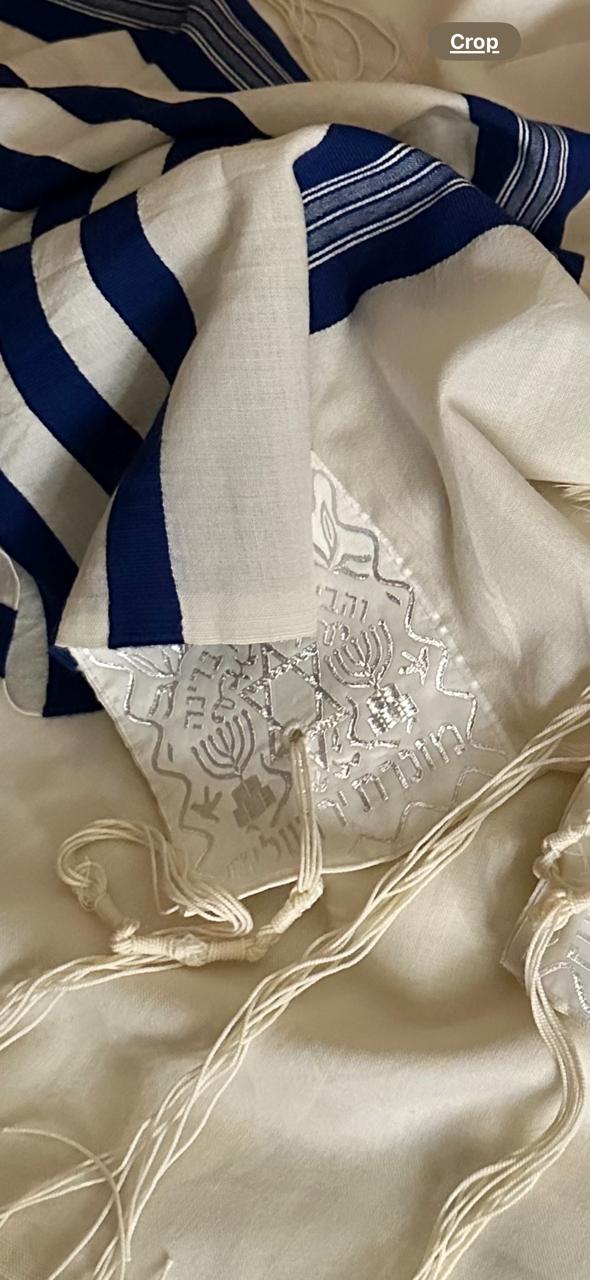
She comes to the threshing floor, and he is sleeping, and she takes the corner of his mantle and spreads it over herself. You know what the corner contained?
The threshing process is a beautiful picture of worship and a metaphor for sanctification. The threshing floor, as a place of worship, is where God’s provision for us is unearthed. Our responsibility is to cooperate with the process and in turn honour Him with the bounty of what is revealed.
The symbolism of the threshing floor represented promises of plenty. If Israel stayed true to their God, the prophet Joel promised their “threshing floors will be filled with grain.” (Joel 2:24)
Thresh’-ing (dush; aloao): Dush means literally, “to trample out.” In Jeremiah 51:33, darakh, is used of threshing.
Araunah (Hebrew: אֲרַוְנָה ʾǍrawnā) was a Jebusite mentioned in the Second Book of Samuel, who owned the threshing floor on Mount Moriah which David purchased and used as the site for assembling an altar to God.
2 Chronicles 3:1-17, NLT. 1So Solomon began to build the Temple of the Lord in Jerusalem on Mount Moriah, where the Lord had appeared to David, his father. The Temple was built on the threshing floor of Araunah
So, Ruth took the corner of his Tallit and spread it on her…her destiny changed!! She became the Great Grandmother of David, from whom came our Messiah.
That was his talith and it contained the tzitzit and it contained the commandments of God. Beloved, one corner is enough for me because I have what God has promised me.
Study the Tzit-Tzit from the Tallit.
Conclusion
Three waves are coming. Let us bow our heads. You can become like Naomi- bitter. You can become like Orpah- leave and go away and never come back. Or you can become like Ruth- who saw her destiny in where she was going.
Ruth watched out for her aging mother-in-law, Naomi, as if she were her own mother. In Bethlehem, Ruth submitted to Naomi’s guidance to become the wife of Boaz.
Ruth’s son, Obed, was the father of Jesse, and Jesse fathered David, Israel’s greatest king.
Ruth is one of only five women mentioned in the genealogy of Jesus Christ (along with Tamar, Rahab, Bathsheba, and Mary) in Matthew 1:1-16).
Ruth was from Moab, a nation hostile toward Israel, but she chose to follow and worship Israel’s God—the one true God, who loves and accepts everyone.
Yahweh works through all people regardless of their age, sex, race, or nationality.
The story of Ruth is a beautiful example of God’s impartiality. People from Moab were often loathed by the Jews, but God selected Ruth to be a direct ancestor of Jesus Christ.
Do you feel disqualified to follow and serve God because of some human prejudice?
God accepts every willing person into His kingdom.


